GST on Health Insurance Premium — 18% rate & current debate
🧾 Introduction
Health insurance has become an essential financial safeguard for individuals and families in India. With rising healthcare costs, medical inflation, and increasing awareness about financial protection, more people are investing in health insurance policies than ever before.
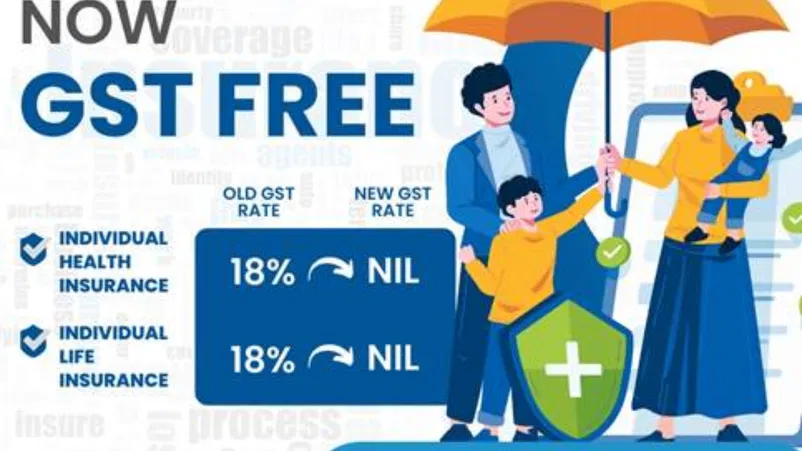
However, one aspect that has consistently attracted attention is the Goods and Services Tax (GST) applicable on health insurance premiums. For several years, health insurance premiums have been subject to 18% GST, which significantly increases the overall cost of obtaining insurance coverage.
The taxation of health insurance has sparked an ongoing debate among policymakers, industry experts, healthcare advocates, and taxpayers. While the government views GST as an important source of revenue, many stakeholders argue that health insurance is a necessity and should either be taxed at a lower rate or exempted entirely.
This article explores the current GST rate on health insurance premiums, the rationale behind the tax, the ongoing debate, and its impact on policyholders.
 📊 What is GST on Health Insurance?
GST (Goods and Services Tax) is an indirect tax levied on the supply of goods and services in India.
Health insurance services provided by insurance companies are classified as taxable services under GST law. Therefore, whenever an individual purchases or renews a health insurance policy, GST is charged on the premium amount.
Currently, health insurance premiums attract:
💰 GST Rate: 18%
This rate applies to most health insurance products offered by insurers in India.
💡 How GST Impacts Health Insurance Premiums
GST is charged over and above the base premium amount.
Example 1
| Particulars | Amount |
|---|---|
| Base Premium | ₹20,000 |
| GST @ 18% | ₹3,600 |
| Total Premium Payable | ₹23,600 |
Example 2
| Particulars | Amount |
|---|---|
| Base Premium | ₹50,000 |
| GST @ 18% | ₹9,000 |
| Total Premium Payable | ₹59,000 |
Example 3
| Particulars | Amount |
|---|---|
| Base Premium | ₹1,00,000 |
| GST @ 18% | ₹18,000 |
| Total Premium Payable | ₹1,18,000 |
For families and senior citizens purchasing high-value policies, GST can substantially increase the annual insurance cost.
 ⚖️ Why is GST Charged on Health Insurance?
The rationale includes:
- Uniform taxation of services
- Revenue generation for public expenditure
- Simplification of indirect tax structure
- Integration of service tax into GST
Prior to GST, health insurance premiums were subject to service tax. GST effectively replaced service tax and other indirect taxes with a unified taxation system.
📈 Current Debate Around GST on Health Insurance
The 18% GST rate on health insurance has become one of the most debated taxation issues in recent years.
Many experts believe that healthcare protection should not be taxed at the same rate as several other commercial services.
🟢 Arguments for Reducing or Removing GST
🏥 Health Insurance is a Necessity
Health insurance is no longer considered a luxury product.
It helps families manage:
- Hospitalization expenses
- Emergency medical treatment
- Critical illness costs
- Long-term healthcare needs
Many believe essential healthcare protection should be taxed minimally or not at all.
👴 Relief for Senior Citizens
Senior citizens generally pay higher premiums due to increased health risks.
An 18% GST further increases the burden on retirees and elderly policyholders who often live on fixed incomes.
👨👩👧 Better Insurance Penetration
India's insurance penetration remains lower than many developed countries.
Reducing GST may:
- Encourage more people to buy insurance
- Increase policy renewals
- Expand healthcare coverage
💰 Lower Financial Burden
Families already struggle with:
- Medical inflation
- Rising treatment costs
- Expensive insurance premiums
Removing GST can make healthcare protection more affordable.
🔴 Arguments for Retaining GST
While there is significant support for GST reduction, some arguments are made in favor of retaining the current structure.
 📊 Government Revenue
GST contributes significantly to government revenue.
Reducing GST on health insurance may impact:
- Tax collections
- Budget allocations
- Public welfare funding
⚖️ Uniform Tax Framework
GST was introduced to create consistency across sectors.
Frequent exemptions may complicate the tax structure.
🏦 Input Tax Credit Considerations
Insurance companies incur GST on various operational expenses.
Changes to GST treatment could affect:
- Pricing structures
- Input tax credit mechanisms
- Administrative processes
📑 Types of Health Insurance Covered by GST
The 18% GST generally applies to:
🏥 Individual Health Insurance Policies
Coverage purchased by an individual.
👨👩👧 Family Floater Policies
Single policy covering multiple family members.
👴 Senior Citizen Health Insurance
Specialized plans for elderly individuals.
🩺 Critical Illness Policies
Coverage against specified serious illnesses.
💼 Group Health Insurance
Employer-sponsored health insurance plans.
🌍 Impact on Policyholders
Lower Premium Policies
GST impact may be relatively modest.
High-Value Policies
GST can add several thousand rupees annually.
For example:
| Annual Premium | GST @ 18% |
|---|---|
| ₹25,000 | ₹4,500 |
| ₹50,000 | ₹9,000 |
| ₹75,000 | ₹13,500 |
| ₹1,00,000 | ₹18,000 |
🏦 Tax Benefits Available to Policyholders
Although GST increases premium costs, policyholders may still claim deductions under:
📌 Section 80D of the Income-tax Act
Tax deductions are available on health insurance premiums paid for:
- Self
- Spouse
- Children
- Parents
Subject to prescribed limits.
This helps offset part of the financial burden associated with health insurance purchases.
⚠️ Challenges Faced by Consumers
❌ Higher Renewal Costs
GST increases annual renewal premiums.
❌ Reduced Affordability
Many individuals delay purchasing adequate coverage due to premium costs.
❌ Senior Citizen Burden
Older individuals face disproportionately higher costs.
❌ Lower Coverage Uptake
Higher premiums may discourage first-time buyers.
 📈 Future Outlook
Industry bodies and healthcare advocates continue to request:
- Reduction of GST from 18% to 5%
- Complete exemption for health insurance
- Special relief for senior citizens
As healthcare affordability remains a national priority, discussions regarding GST rationalization are likely to continue.
Any future changes would have a direct impact on:
- Insurance penetration
- Consumer affordability
- Healthcare accessibility
🌟 Benefits of Lower GST on Health Insurance
If GST is reduced in the future, potential benefits may include:
✅ Increased Health Insurance Coverage
More individuals may purchase policies.
✅ Better Financial Security
Families can protect themselves against unexpected medical expenses.
✅ Reduced Healthcare Burden
Lower insurance costs improve accessibility.
✅ Greater Support for Senior Citizens
Reduced premium costs benefit elderly policyholders.
🏁 Conclusion
The 18% GST on health insurance premiums remains one of the most widely discussed issues in India's insurance sector. While the government treats health insurance as a taxable service under the GST framework, many stakeholders believe that healthcare protection is a basic necessity and should receive preferential tax treatment.
The debate centers on balancing government revenue requirements with the need to make health insurance more affordable and accessible to the public. Higher premiums resulting from GST can discourage insurance adoption, particularly among middle-income families and senior citizens, who are often the most vulnerable to rising medical costs.
As India continues to focus on expanding healthcare access and increasing insurance penetration, the discussion around reducing or exempting GST on health insurance is expected to remain relevant. Until any policy changes are introduced, policyholders should carefully evaluate their coverage needs, utilize available tax deductions under Section 80D, and factor GST into their overall healthcare planning.
👉 Health insurance is not merely a financial product—it is a crucial tool for protecting families from medical emergencies. Making it more affordable can play a significant role in strengthening India's healthcare and financial security ecosystem.
📲 Stay Connected & Learn More
📞 Reach out via Call or WhatsApp: +91 8802912345
Related Articles
GST Applicability & Tax Rates on Insurance and Banking
Introduction Goods and Services Tax (GST) is a significant indirect tax reform that was introduced in India on July 1, 2017, replacing the complex web of indirect taxes like VAT, service tax, excise duty, and others. GST has brought about a uniform ...GST Applicability & Tax Rates on Health Care
GST on Healthcare Services – GST Applicability, Taxability and Exemption Limit for Services The ‘Goods and Services Tax’ journey was started, in the year 2000, when the GST committee was set up. It took long 17 years for the GST law to evolve in ...GST Applicability & Tax Rate on Biotechnology
The rationalization of the goods and services tax (GST) rates has dealt a severe blow to Indian scientists. As the tax rates on scientific and technical instruments to public research institutes went up from 5% to “applicable rates,” scientists will ...GST Applicability & Tax Rates on Research & Development
Leveraging Existing Policies/Schemes for R&D Tax/Expenditure Relief With Indian entities (including Global Corporations having R&D Operations in India) nowadays becoming more and more Research (R&D) oriented, it is imperative that Research ...Big Update on GST for Motorcycles
?️ Big Update on GST for Motorcycles By Taxaj | Updated on: September 3, 2025 ? Introduction The Indian two-wheeler market is facing one of the biggest tax reforms since the introduction of the Goods and Services Tax (GST) in 2017. The GST Council, ...