Increase in Paid-up Capital — Right issue vs preferential allotment
🧾 Introduction
As businesses grow, they often require additional capital to fund expansion, working capital requirements, technology upgrades, acquisitions, or strategic investments. One of the most common ways for a company to raise funds is by increasing its paid-up share capital through the issue of new shares.
Under the Companies Act, 2013, private limited companies and public companies can raise additional equity through various methods, the most common being:
- ✅ Right Issue
- ✅ Preferential Allotment
While both methods result in an increase in paid-up capital, they differ significantly in terms of procedure, regulatory requirements, pricing flexibility, investor participation, and compliance obligations.
Understanding the difference between a rights issue and a preferential allotment is crucial for promoters, investors, startups, and growing businesses seeking capital infusion.
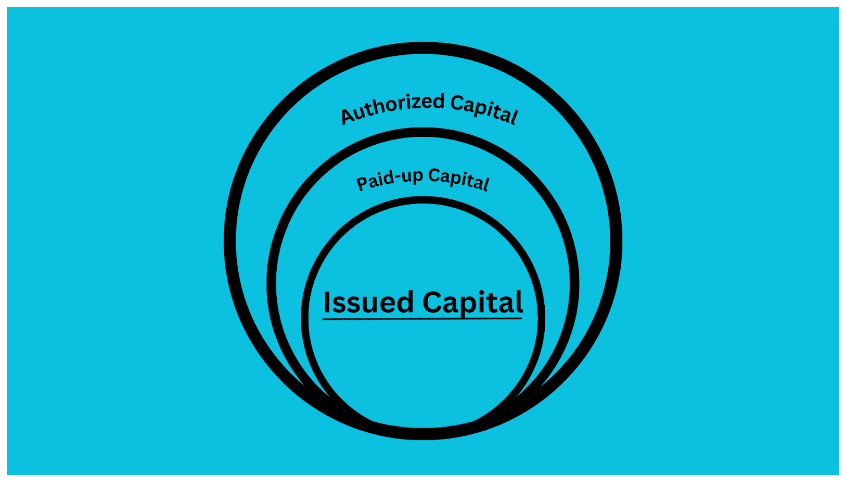 📘 What is Paid-up Capital?
Paid-up capital refers to the amount of money received by a company from shareholders in exchange for shares issued.
Formula
📊 Paid-up Capital = Number of Shares Issued × Face Value of Shares
Example:
| Particulars | Amount |
|---|---|
| Shares Issued | 1,00,000 |
| Face Value | ₹10 |
| Paid-up Capital | ₹10,00,000 |
Whenever additional shares are issued and consideration is received, the paid-up capital increases.
📊 Methods of Increasing Paid-up Capital
Companies generally increase paid-up capital through:
- Right Issue
- Preferential Allotment
- Private Placement
- Bonus Issue
- ESOP Conversion
- Conversion of Convertible Securities
Among these, Right Issue and Preferential Allotment are the most commonly used methods.
🟢 What is a Right Issue?
A Right Issue is an offer of new shares made by a company to its existing shareholders in proportion to their current shareholding.
It is governed under:
📌 Section 62(1)(a) of the Companies Act, 2013
The company must first offer shares to existing shareholders before offering them to outsiders.
📋 Example of Right Issue
| Shareholder | Existing Shares |
|---|---|
| A | 6,000 |
| B | 4,000 |
Total Shares = 10,000
If the company issues 5,000 additional shares through a rights issue:
| Shareholder | Entitlement |
|---|---|
| A | 3,000 |
| B | 2,000 |
The offer is made proportionately based on existing ownership.
🌟 Advantages of Right Issue
✅ Maintains Existing Ownership Structure
Shareholders can maintain their percentage holding.
✅ Simpler Compliance
Compared to preferential allotment.
✅ No Valuation Requirement (Generally for Private Companies)
Pricing flexibility is available.
✅ Faster Fund Raising
Particularly useful in closely held companies.
⚠️ Limitations of Right Issue
❌ Funds Limited to Existing Shareholders
The company cannot directly bring in a new investor unless existing shareholders renounce their rights.
❌ Shareholders May Decline
The company may not receive the desired funds if shareholders do not subscribe.
🔵 What is Preferential Allotment?
Preferential Allotment means issuing shares to a selected person or group of persons on a preferential basis.
📌 Section 62(1)(c) of the Companies Act, 2013
The shares may be issued to:
- Existing shareholders
- New investors
- Strategic partners
- Foreign investors
- Promoters
subject to shareholder approval.
📋 Example of Preferential Allotment
Suppose a company has:
| Particulars | Amount |
|---|---|
| Existing Capital | ₹10 Lakhs |
A new investor agrees to invest:
| Investment | ₹20 Lakhs |
The company may allot shares directly to the investor through preferential allotment.
This introduces a new shareholder into the company.
🌟 Advantages of Preferential Allotment
✅ Attracts New Investors
Ideal for:
- Angel investors
- Venture capital funds
- Strategic investors
✅ Flexible Capital Raising
Company can select specific investors.
✅ Useful for Startup Funding
Widely used in fundraising rounds.
✅ Supports Foreign Investment
Can be used for FDI transactions subject to FEMA compliance.
⚠️ Limitations of Preferential Allotment
❌ More Compliance Requirements
Requires:
- Special Resolution
- Valuation
- Additional filings
❌ Possible Dilution of Existing Shareholders
Ownership percentages may change.
❌ FEMA Compliance for Foreign Investors
Additional RBI reporting may apply.
⚖️ Right Issue vs Preferential Allotment
| Particulars | Right Issue | Preferential Allotment |
|---|---|---|
| Governing Section | 62(1)(a) | 62(1)(c) |
| Offered To | Existing shareholders | Selected persons |
| New Investor Allowed | Generally No | Yes |
| Shareholder Approval | Board Resolution (and process compliance) | Special Resolution |
| Valuation Requirement | Generally simpler | Usually required |
| Ownership Dilution | Minimal | Possible |
| Compliance Level | Lower | Higher |
| Suitable For | Internal funding | External funding |
📑 Key Compliance for Right Issue
Board Meeting
Approve:
- Number of shares
- Offer letter
- Record date
Rights Offer Letter
Issue offer to shareholders.
Acceptance/Renunciation Period
Offer remains open for prescribed period.
Allotment
Shares allotted upon subscription.
ROC Filing
File:
📌 PAS-3
(Return of Allotment)
within prescribed timelines.
📑 Key Compliance for Preferential Allotment
Board Meeting
Approve proposal.
Valuation Report
Required in many cases to justify issue price.
Shareholder Approval
Special Resolution required.
Offer Letter
Issue offer to identified persons.
Receipt of Funds
Funds must be received through banking channels.
Allotment
Shares allotted within prescribed timelines.
ROC Filing
File:
📌 PAS-3
for allotment reporting.
🌍 Preferential Allotment to Foreign Investors
Additional compliance may include:
- FEMA regulations
- Pricing guidelines
- FC-GPR filing
- RBI reporting
Failure to comply can result in penalties and late submission fees.
💰 Which Option is Better?
The answer depends on the objective.
Choose Right Issue When:
✅ Existing shareholders are funding the company.
✅ Ownership pattern should remain unchanged.
✅ Faster and simpler capital infusion is needed.
Choose Preferential Allotment When:
✅ New investors are coming in.
✅ Startup funding is being raised.
✅ Strategic investors are involved.
✅ Foreign investment is proposed.
⚠️ Common Mistakes
❌ Incorrect Valuation
Particularly in preferential allotments.
❌ Delay in PAS-3 Filing
Can attract penalties.
❌ Ignoring FEMA Compliance
In foreign investment transactions.
❌ Improper Shareholder Approval
May invalidate the issue process.
🏁 Conclusion
Increasing paid-up capital is a crucial step in a company's growth journey, and selecting the right method can significantly impact ownership structure, compliance obligations, and future fundraising opportunities.
A Right Issue is generally the preferred route when existing shareholders wish to contribute additional funds while maintaining their proportionate ownership. It offers a relatively simple and cost-effective mechanism for raising capital.
On the other hand, a Preferential Allotment is ideal when the company intends to bring in new investors, strategic partners, angel investors, venture capital funds, or foreign shareholders. While it offers greater flexibility and fundraising potential, it also involves higher regulatory compliance and documentation requirements.
Before proceeding with any capital increase, companies should carefully evaluate shareholder interests, valuation requirements, Companies Act provisions, and FEMA implications (where applicable) to ensure a legally compliant and strategically beneficial transaction.
👉 For startups and growing companies, choosing the correct capital-raising route can play a critical role in supporting future expansion and attracting investment.
📲 Stay Connected & Learn More
📞 Reach out via Call or WhatsApp: +91 8802912345
Related Articles
How to Handle Reverse Charge on Royalty Paid to Foreign Creators
? Introduction In the globally connected digital economy, Indian companies and individuals are increasingly collaborating with foreign creators, including musicians, designers, software developers, and other intellectual property holders. These ...Tax Implications on Sale of Unlisted Equity Shares
Extract from Income Tax Act Insertion of new Chapter XII-DA. 31. After Chapter XII-D of the Income-tax Act, the following Chapter shall be inserted with effect from the 1st day of June, 2013, namely:— 'CHAPTER XII-DA SPECIAL PROVISIONS RELATING TO ...CA Services for Compliance with the Companies Act
? Introduction The Companies Act, 2013, is the principal legislation that governs companies in India. Its aim is to ensure transparency, accountability, and good governance in corporate entities. However, with its complex provisions, adherence to ...Private Limited Company Registration in India — 2026 step-by-step cost & timeline
🧾 Introduction A Private Limited Company (Pvt Ltd) is the most preferred business structure for startups, SMEs, technology companies, manufacturers, exporters, and businesses seeking investment in India. Registered under the Companies Act, 2013, it ...Board Meeting & AGM Compliances under the Companies Act, 2013 – Complete Guide (FY 2026-27)
Introduction Board Meetings and Annual General Meetings (AGMs) are fundamental corporate governance requirements under the Companies Act, 2013. Every company registered in India must comply with the statutory provisions relating to the conduct of ...